
The board and the round
Every game starts with a 5x5 grid of numbers and a fixed number of spins. Each spin turns up five symbols beneath the grid, one for each column, and any number matching your grid is marked. The round ends when you run out of spins, at which point you can usually buy more with Credits, which is the decision that defines Slingo: the price of the next spin rises as the round goes on, and so does what you stand to win. Knowing when to stop is the skill.
The 12 Slingos, and when there are 24
A standard board contains 12 possible lines: five horizontal, five vertical and two diagonals. Some variants change that. In Slingo Advantage, Bounce Slingos let lines reflect off the edges of the grid, which doubles the number of possible lines from 12 to 24 and changes which squares are worth chasing. If you are used to counting lines on a classic board, that variant needs a different eye.
What each symbol does
The symbols are where the strategy lives, and they vary a little by variant.
- Joker: Marks off any number in the column it lands on. Placement is your choice, and it is the main decision in the game.
- Super Joker: Marks off any number anywhere on the grid, so it can complete a line the reel would never reach.
- Free Spin: Extends your round at no cost. Always worth more than the points from a single mark.
- Devil: Costs you points. Some variants let you block it, which is what Devil Protection is for.
- Cherub: Chases the Devil off before it can take your points, and in some variants doubles your current score.
- Gold Coin and Key: Straight point adds, worth 1,000 and 1,200 points respectively in the variants that use them.
Smart Joker placement
A Joker is only as good as where you put it, and the instinct to mark the number that completes the most immediate progress is often wrong. Ask which square is least likely to come up on the reel: numbers that appear on fewer positions of the strip are the ones you may never see again, so spending your Joker there converts a probable miss into a certainty. Also count lines rather than squares. A mark that sits at the intersection of a row, a column and a diagonal is worth three partial Slingos, while a mark in the middle of a row is worth one.
Chasing the Full House
Clearing every square is the biggest prize on the board and the most expensive mistake in the game. Spin prices climb as a round goes on, so the last few squares can cost more than the Full House pays unless the jackpot has grown. The discipline is to decide before you start buying how many extra spins you are willing to fund, and to hold that line when you are two squares away, which is precisely when the game is at its most persuasive.
The variants worth knowing
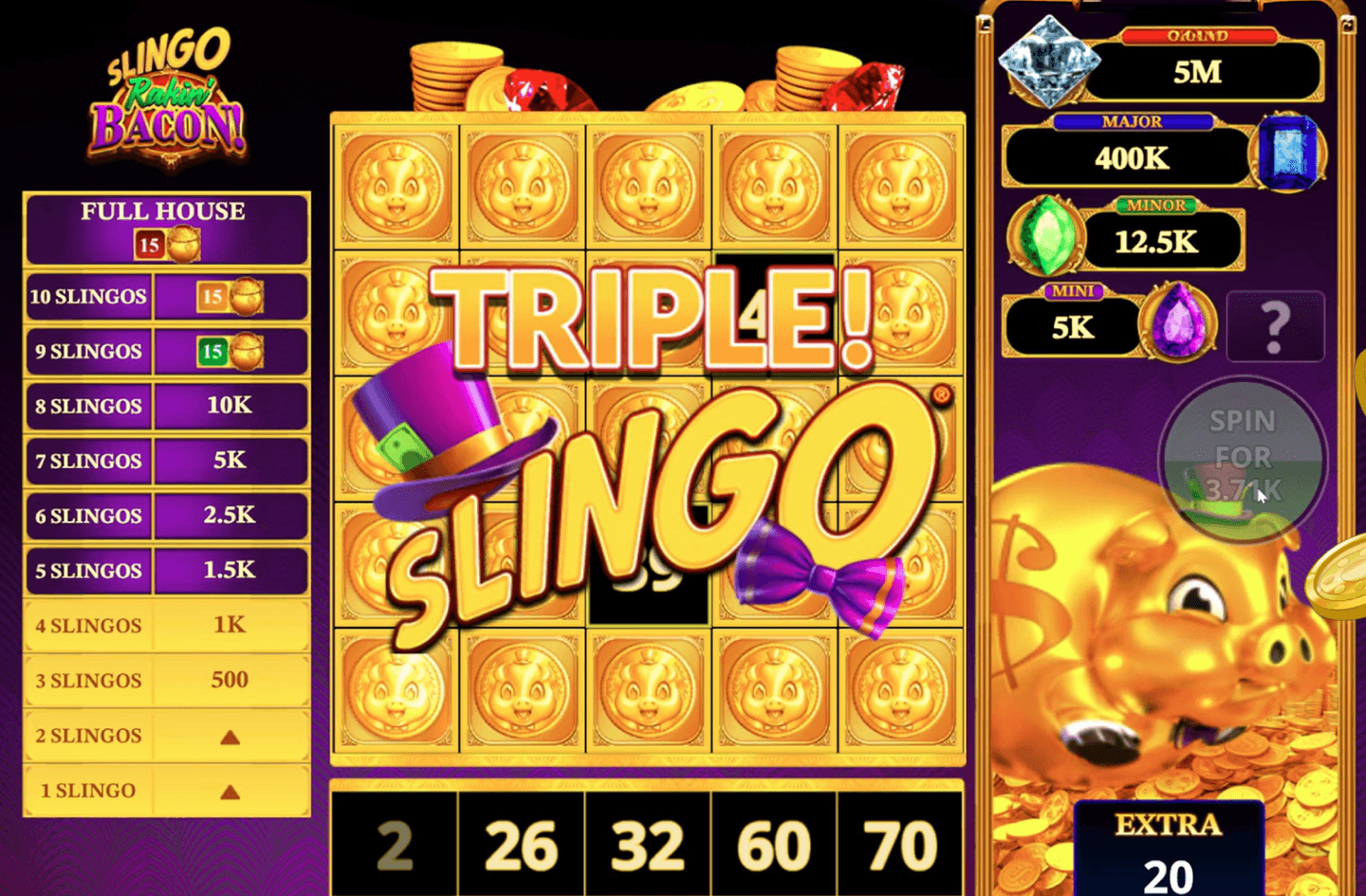
The permanent library runs on four shapes. Classic is the plain board and the right place to learn. Quest adds symbols and objectives on top, including the Gold Coins and Keys. Advantage is the strategic one, letting you choose power-ups before a round, such as Devil Protection, extra Jokers or multipliers, so you are trading one advantage against another. Piggy Bank builds a pot as you play. Gaming Realms adds roughly 18 to 22 new Slingo titles a year across the platform, so expect the library to change gradually rather than weekly.
How free Credits keep you playing
Every decision above gets easier with a healthy balance, because the pressure in Slingo comes from the price of the next spin. The Mystery Bonus every four hours, the Daily Bonus Wheel, tournaments and the Credit links on this page are what keep that pressure off. Collect them before a session rather than after, and the Full House decision becomes a choice rather than a gamble with your last Credits.
Every free Credit source